Bedding • Practical guide
Wool Toppers Explained: Comfort, Temperature and Care
A wool topper can soften the first impression of a bed without replacing the mattress beneath it. Its natural fibres also take up and release moisture, which may help create a more even-feeling sleep surface. But the result depends on the wool, the construction and the mattress underneath. Here’s how to judge whether a wool topper suits your needs—and how to look after one once it’s in place.
What is a wool mattress topper?
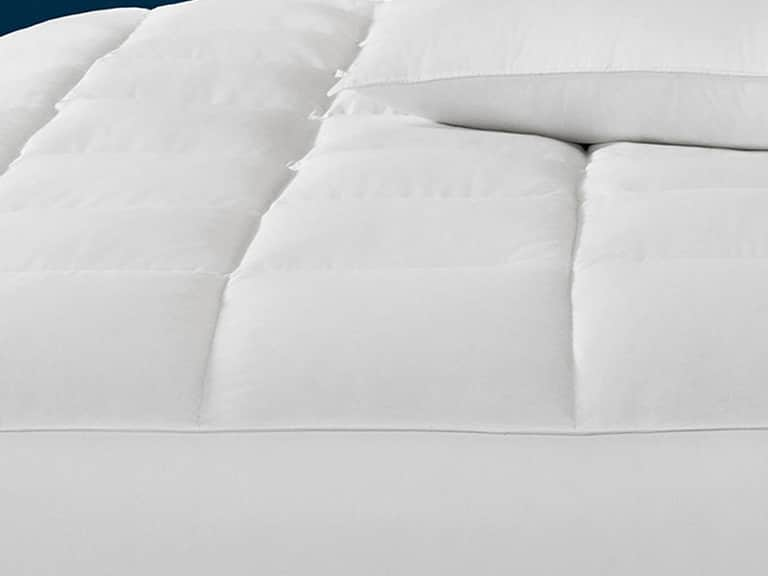
A mattress topper is a separate layer placed on top of a mattress, beneath the fitted sheet. It is intended to adjust the surface feel: adding cushioning, changing how closely the bed conforms to the body, or providing a little extra insulation. A wool mattress topper uses wool as its principal filling, often enclosed in a fabric cover such as cotton. Some designs have elasticated corners or a skirt to hold the topper in place; others lie loose on the bed.
It is useful to distinguish a topper from a mattress pad or protector. A topper is generally chosen to alter comfort. A pad may offer a lighter layer of padding, while a protector is chiefly intended to shield the mattress from spills, perspiration and everyday wear. Products can overlap in function, so their construction and care instructions matter more than the label alone.
Wool toppers vary considerably. The quantity and arrangement of the filling, the type of wool, the quilting pattern and the outer fabric all affect the way a topper feels. A thick, lofty layer may feel more yielding than a lightly filled one. A tightly quilted design can feel more even and contained. The term “wool topper” describes a material, not one standard level of softness or support.
How wool changes the feel of a bed
The clearest reason to consider a topper is comfort at the surface. Wool fibres create a cushioned layer between the sleeper and the mattress cover. Depending on thickness and construction, that layer may take the edge off a firm-feeling bed or make the contact surface feel less hard. It can also change how pressure is distributed across the body, though the amount of change depends on the topper and the sleeper.
A topper is not a substitute for a mattress that has lost its underlying support. It cannot reliably correct a deep dip, a broken spring or a base that is no longer stable. Nor should it be expected to transform a very firm mattress into a deeply conforming one. If the mattress is sagging or uncomfortable in a way that feels structural, adding a soft layer may disguise the problem temporarily rather than solve it.
Think of the topper as an adjustment, not a reset. It can influence the surface sensation, but the mattress still provides most of the bed’s support. People sharing a bed should also consider whether a change that suits one person’s preferred feel will work for the other. When possible, test a comparable wool-filled surface and check return conditions before making a decision.
Some wool toppers are described as pressure-relieving. That phrase should be understood as a potential comfort effect, not a medical promise. Individual bodies, sleep positions and mattresses differ. If pain or persistent sleep disruption is a concern, a topper is not a diagnosis or treatment; it may be one practical element in a broader effort to improve the sleep environment.
Temperature and moisture: what wool can—and cannot—do
Wool is often chosen for its ability to absorb moisture vapour and its insulating qualities. In bedding, those properties can contribute to a sleep surface that feels less clammy and more balanced. Wool does not simply “cool” a bed or “warm” it on command. Its effect depends on the amount of filling, the fabric around it, the mattress, the sheets, room conditions and the person sleeping there.
That distinction matters for anyone who sleeps warm. A wool topper may feel more breathable than some dense, heat-retaining surfaces, but it still adds a layer between the body and the mattress. A thick, heavily filled topper can feel warmer than a thin one. Likewise, a breathable filling cannot compensate fully for a warm room, heavy duvet or sheets that trap heat.
Wool can take up moisture without immediately feeling wet, then release it as conditions change. This may help moderate the sensation of humidity around the body, but it does not make a bed waterproof. Sweat, spills and other liquid can still pass through the cover and reach the filling or mattress. A separate, suitable protector may be useful, provided it does not undermine the breathability or fit you want.
In practical terms, look at the whole bed rather than one material in isolation. If you often wake overheated, consider the topper’s thickness and cover, but also review your duvet, sheets, nightwear and bedroom temperature. If you tend to feel cold, a more substantial wool layer might add welcome insulation. Neither outcome is guaranteed, and personal comfort is the best measure.
Choosing a wool topper: the details to check
Start with your mattress and your reason
First, identify what you want to change. Is the mattress sound but a little too firm at the surface? Are you looking for a softer layer, a more cushioned feel, or an additional degree of warmth? A clear goal helps narrow the options. If the issue is mattress sagging, uneven support or a worn-out base, a topper is unlikely to provide a lasting fix.
Consider the mattress construction, too. A topper will sit on top of the existing surface and may respond differently on a firm spring mattress than on a mattress that already has a soft comfort layer. A very plush mattress may become too yielding with a substantial topper. Try to assess the combined feel, not the topper in isolation.
Check size and depth
Measure the mattress itself rather than relying only on the label on its packaging. In the UK, common bed sizes include single, double, king and super king, but dimensions can vary between manufacturers and some beds use non-standard measurements. A topper that is too small may leave uncovered edges; one that is too large can bunch or hang unevenly. Confirm its length and width against the mattress, and check that the fitted sheet can still accommodate the added height.
Also check how the topper attaches. Elasticated corners or a skirt may help keep it aligned, but the fit needs to match the mattress depth. A loose topper can shift as the bed is used, particularly if sleepers move frequently. A fitted design may sit more securely, while a loose style may be easier to lift and air. There is no universal best attachment method; convenience and mattress dimensions should guide the choice.
Look beyond “natural” and “luxury”
Words such as “natural” and “luxury” do not tell you how a topper will feel or perform. Read the material details: what the filling is, what the outer fabric is made from, how the filling is held in place and whether any blend is used. Wool may be paired with cotton or other fibres, and the proportions can affect the surface, weight and care requirements.
Construction is just as important as fibre content. Quilting and internal compartments can influence whether filling stays evenly distributed. A stated height gives a rough sense of loft, but does not by itself explain softness. If specifications are unclear, ask the maker how the topper is designed to fit and whether it is intended to add substantial cushioning or a subtler layer.
Consider care before buying
Care instructions are part of the product, not an afterthought. Some wool-filled items should not be machine washed; others may have specific cleaning directions. Check the label before purchase and make sure the recommended routine fits your household. If you need a topper that can be washed frequently, do not assume that a wool filling will be suitable without verifying its care requirements.
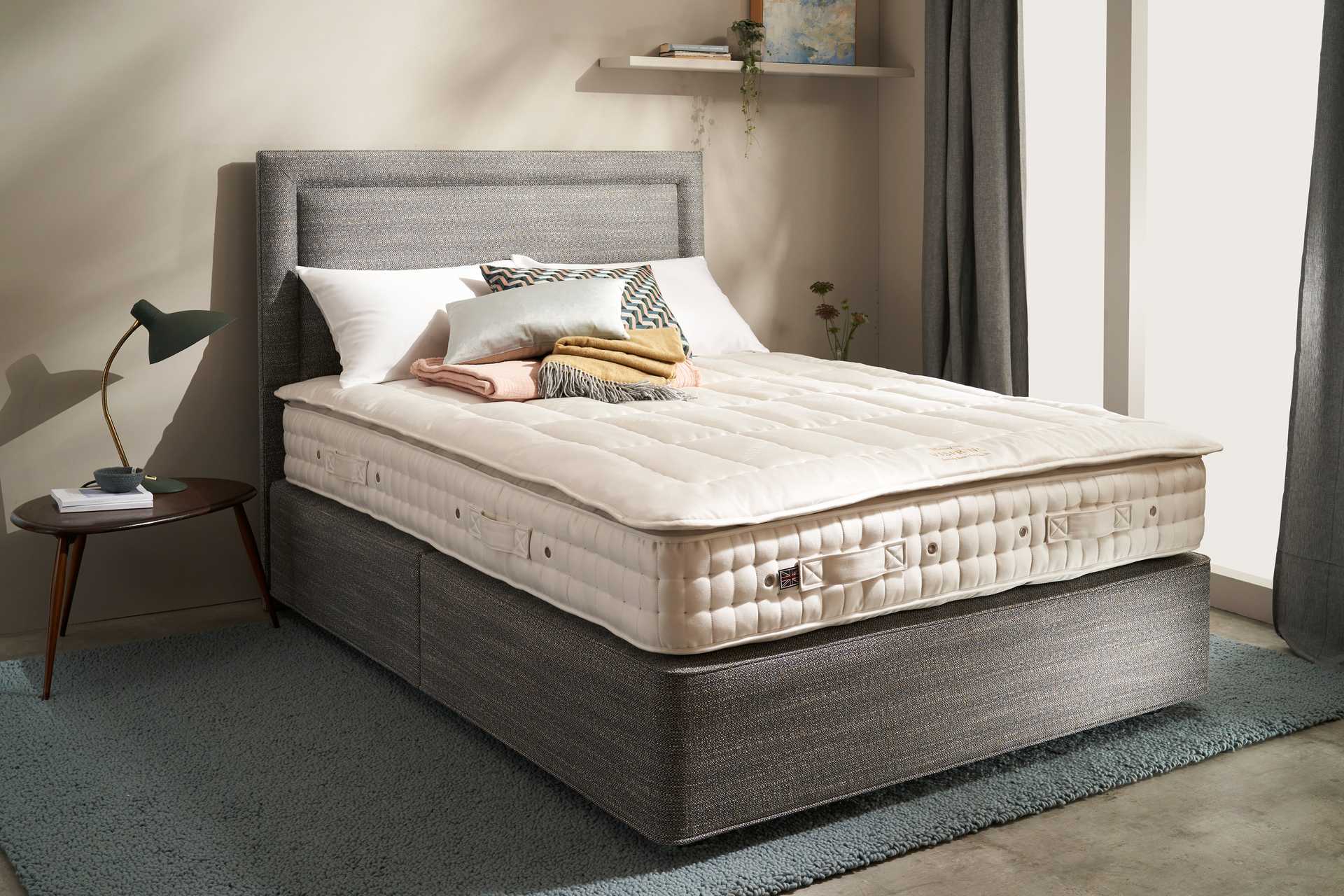
For a concrete example of the category, the Vispring Heaven Luxury Mattress Topper is described as a blend of cotton and British wool, with a stated height of 2.8 inches. Its details illustrate why filling, cover and height are worth checking together; they should not be taken as a guarantee that any particular topper will suit every mattress or sleeper.
A careful routine for keeping a wool topper fresh
Wool bedding benefits from sensible, regular care rather than aggressive cleaning. Follow the manufacturer’s instructions first: different products can have different covers, fillings and construction. If the label says not to wash the item, do not improvise with a washing machine. Water, heat or strong agitation may affect the filling, shape or stitching.
- Air it regularly. When changing the bed, pull back the bedding for a while to let moisture disperse. If practical, air the topper in a dry, well-ventilated space, following any handling guidance from the maker.
- Use a compatible protector. A mattress protector can help reduce everyday soiling, but check that it fits over the mattress and topper and does not create an unwanted, less breathable surface.
- Deal with spills promptly. Blot liquid gently with a clean, dry cloth. Avoid rubbing, which can spread a mark or disturb the fabric. Follow the product’s cleaning directions before using any cleaning solution.
- Keep it dry. Store a topper only when it is fully dry, and avoid leaving it compressed in a damp or poorly ventilated place. Moisture can lead to lingering odours and may damage bedding over time.
- Rotate only if advised. Some designs may benefit from occasional repositioning, while others have a designated top or bottom. Check the care information rather than assuming the topper can be turned or flipped.
Wool may have a distinct natural scent when new, but that does not mean every topper will smell the same or that any strong or persistent odour should be ignored. Airing the item as directed may help with ordinary new-material smells. If an odour is unusually strong, remains after appropriate airing or is accompanied by visible dampness, contact the maker for advice.
Care also means realistic expectations. A topper is exposed to pressure, friction, body moisture and the movement of sheets night after night. Over time, the filling may settle or the surface may change. Gentle handling and suitable protection can help keep it in good condition, but no bedding layer remains unchanged indefinitely.
Wool toppers and allergies
Material sensitivity is personal. Wool is an animal fibre, and some people may find it uncomfortable or unsuitable. Others may be more concerned about the fabric cover, detergents or the way a product is processed than the wool itself. Product descriptions can help identify materials, but they cannot predict an individual response.
If you have a known allergy or sensitivity, check the complete materials list and speak with a qualified health professional if you are unsure. Do not rely on broad claims such as “hypoallergenic” as a substitute for checking what is actually in the product. A washable cover or a protector may help with some practical concerns, but it will not make every material suitable for every person.
Good bedding hygiene is useful regardless of the filling. Wash sheets and removable covers according to their labels, keep the room ventilated, and air the bed when possible. A topper itself should be cleaned only in ways permitted by its care instructions.
Common assumptions, reconsidered
- “Wool always sleeps cool.” Wool can help manage moisture and provide insulation, but a thick topper can add warmth. The full bedding system and bedroom conditions matter.
- “A topper can fix any uncomfortable mattress.” It can change surface feel, but it cannot restore a worn or sagging support system.
- “Natural means maintenance-free.” Natural fibres still need appropriate cleaning, airing and protection. Care requirements vary by product.
- “More filling means better comfort.” Greater loft may feel more cushioned, but the right amount depends on the mattress, preferred firmness and sleeping temperature.
- “A wool topper is automatically sustainable.” Fibre choice is only one part of a product’s environmental story. Materials, sourcing, manufacturing, durability and care all matter, and claims should be assessed on the evidence provided.
Is a wool topper right for you?
A wool topper may be worth considering if your mattress is in sound condition but its surface feels too firm, or if you want a naturally insulating layer with moisture-managing characteristics. It may also appeal if you prefer a filling other than foam and are prepared to follow the product’s care instructions. The key is to choose by need and construction, not by a promise that one material will deliver a particular night’s sleep.
It may be less suitable if you need a fully washable layer but the product’s care label rules out machine washing, if the added height makes fitted sheets difficult to use, or if wool does not suit your material preferences. A person who sleeps hot should pay particular attention to loft and bedding layers rather than assuming wool will automatically cool the bed.
Before deciding, check three things: the topper’s dimensions and attachment method; its filling, cover and height; and its care requirements. Then compare those details with the condition of your mattress and the change you hope to make. A good choice is not necessarily the thickest or most expensive one. It is the layer that fits the bed, the routine and the sleeper.
Frequently asked questions
Does a wool topper make a mattress softer?
It can add cushioning and alter the surface feel, but the effect depends on the topper’s filling and construction as well as the mattress beneath it. It will not repair a mattress with a structural fault or deep sagging.
Can I put a protector over a wool topper?
Usually, a protector can be used as part of the bedding arrangement, but confirm that it fits the combined mattress and topper depth. Choose one that suits your priorities, and check whether its feel or construction changes the breathability of the sleep surface.
How often should I clean a wool mattress topper?
There is no single schedule for every product. Follow the care label and air the topper regularly. Some designs are not suitable for machine washing, so check the instructions before cleaning rather than relying on a general rule.
Will wool help if I wake up hot?
Wool’s moisture-managing properties may contribute to a more comfortable surface for some sleepers, but a wool topper is not a guaranteed cooling solution. Its thickness, cover, the rest of your bedding and the room temperature all influence how warm the bed feels.
How do I stop a topper from moving?
Choose the correct dimensions and check whether the design uses elasticated corners, a skirt or another attachment method. Make sure the fitted sheet accommodates the extra depth. If the topper still shifts, review its fit and the manufacturer’s recommendations.
The takeaway
Wool toppers sit at the meeting point of comfort, insulation and everyday care. They can add a soft layer and may help manage moisture, but they are not a cure-all for an unsuitable or worn mattress. Match the topper to the bed you have, verify dimensions and construction, and take its care instructions seriously. The best result is often a modest, well-matched change—not a dramatic promise.