Mattress comfort guide
How to Choose a Latex Mattress Topper for Your Existing Bed
A latex mattress topper can change the feel of a bed without replacing the mattress. The right choice depends on what you want to improve, how your current mattress behaves, and how much cushioning suits your body and sleep position. Thickness and firmness matter—but so does the condition of the bed beneath.
Start with the bed you already have
A topper is a surface layer, not a repair kit. It can add cushioning to a mattress that feels too firm, soften pressure at the shoulders or hips, or introduce the buoyant response associated with latex. It cannot reliably restore support to a mattress that has sagged, developed deep body impressions, or lost its underlying structure.
Before comparing latex mattress toppers, spend a few nights paying attention to the problem you are trying to solve. Is the surface uncomfortable only in one sleeping position? Do you feel pressure when lying on your side? Does the mattress feel hard but remain level and supportive? Or does your body sink into a hollow that is visible when the bed is empty?
Those distinctions matter. A firm, level mattress may benefit from a comfort layer. A worn-out mattress may not. If the bed dips noticeably, has damaged springs, or leaves you waking with discomfort that seems to come from a lack of support, adding a topper may disguise the issue briefly without addressing it. A new layer conforms to the shape beneath it; it does not make an uneven foundation even.
Check the mattress on its base, too. A weak, bowed or unsuitable bed frame can affect how the mattress performs. Review the mattress manufacturer’s guidance for the type and spacing of slats or other support it requires. A topper placed on an unstable setup cannot compensate for the structure below.
What a latex topper feels like
Latex is often chosen for its responsive feel. Rather than slowly moulding around the body, as some slow-recovery foams do, latex generally compresses under pressure and rebounds quickly when the pressure lifts. That spring-back can make it easier to change position, while still allowing the surface to cushion parts of the body that press into the bed.
“Responsive” does not mean universally comfortable. Some sleepers enjoy a buoyant, gently lifting sensation; others prefer a surface that feels more deeply enveloping. The actual feel depends on the latex formulation, its firmness, the topper’s thickness, and the mattress underneath. A topper described as soft may feel different on a firm mattress than it does on a yielding one.
Latex toppers may be made from natural latex, synthetic latex, or a blend. Natural latex is derived from rubber-tree sap, while synthetic latex is manufactured from petrochemical-based materials. Product descriptions can use terms such as “natural” or “organic,” but those words alone do not tell you the full composition or establish a particular certification. If material origin or processing is important to you, check the specification and look for clearly identified, independently verifiable certifications.
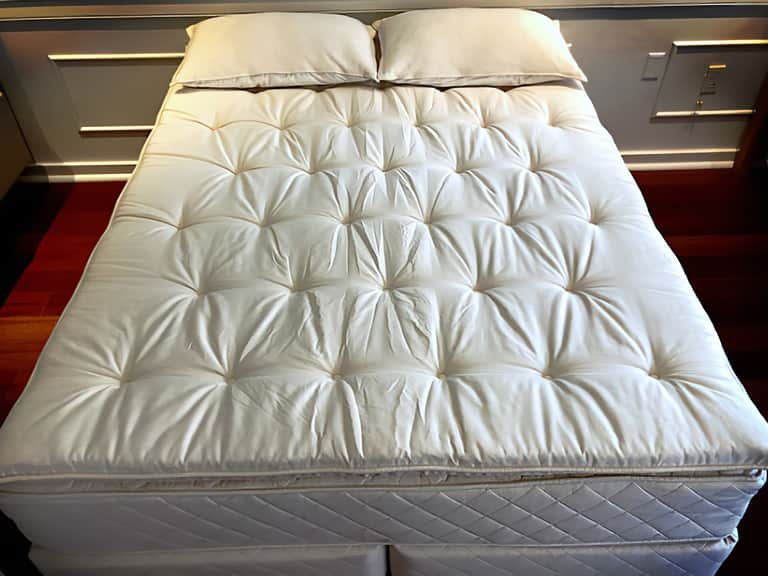
Some toppers combine latex with other materials, including wool and cotton. That changes the construction and may change the surface feel, care requirements and overall height. For example, the Obasan Deluxe Organic Wool and Latex Mattress Topper is described as 2.5 inches thick, with 1.5 inches of soft organic latex surrounded by organic wool. It is one example of a layered construction; it is not a guarantee that the same feel will suit every mattress or sleeper.
Choose thickness by the change you want
Thickness is one of the most visible differences between latex mattress toppers, but a larger measurement is not automatically an upgrade. The useful question is how much change the existing bed needs. A thin topper can subtly adjust the surface. A thicker one is more likely to create a noticeable cushion, though it also adds height and can alter how the mattress feels beneath you.
- A thinner layer may suit someone seeking a modest adjustment without substantially changing the bed’s profile.
- A medium-thickness layer can make a more perceptible difference to pressure cushioning while retaining some of the mattress’s original character.
- A thicker layer may provide a more pronounced surface change, but can make the bed feel taller or less connected to the support of the mattress underneath.
These are practical descriptions, not universal rules. The same topper can behave differently on a firm spring mattress, a foam mattress or an already-plush surface. A thick layer on a soft mattress may allow more sink than you want; a thin layer on a very firm one may not provide enough cushioning to address the discomfort that prompted the search.
Think about the change in layers. The mattress beneath provides the principal support; the topper modifies the contact surface. If your mattress is supportive and simply feels too hard at the shoulders or hips, adding cushioning may help the surface feel more accommodating. If it feels too soft or unstable, a soft topper is unlikely to make it firmer. A topper can alter sensation, but it cannot reverse the underlying mattress’s construction.
When shopping, confirm whether the stated thickness describes the latex core alone or the complete product, including any wool, fabric or quilting. A topper with a 1.5-inch latex core may have a greater total height once its surrounding materials are included. Product measurements should be read as construction details rather than as a direct promise of comfort.
Firmness is personal—and depends on the mattress
Firmness labels are useful for comparing options within a product range, but they are not a universal measuring system. “Soft,” “medium” and “firm” can vary between manufacturers. More important is the way the combined sleep surface feels when the topper sits on your own mattress.
Body weight influences how far a person compresses a given layer. A topper that feels gently cushioned to one sleeper may feel firmer to someone who places less weight on each area of the surface. Sleeping position also changes the demands on the layer. Side sleepers often put concentrated pressure on the shoulder and hip; back sleepers may prefer a more even balance between cushioning and support; stomach sleepers commonly need to avoid excessive sink around the midsection.
These are starting points, not prescriptions. Body shape, preferred posture, sensitivity to pressure and personal comfort all play a part. Two people sharing a bed can also experience the same topper differently. If possible, try the product under realistic conditions or check the return policy before buying. Read its terms carefully: the length of a trial, eligibility requirements and return costs can differ.
It may help to describe your goal in plain language before looking at firmness names. “A little less hard at the shoulder” is more actionable than “I need a medium topper.” So is “I want to move more easily without feeling perched on top.” Specific needs make it easier to compare construction and thickness without being led by labels alone.
Match the topper to your sleeping position
Your usual position provides clues about where pressure is concentrated, and how a new layer may feel. It does not dictate one correct topper, but it can help narrow the choices.
Side sleeping
Side sleepers may notice pressure at the shoulder or hip if the mattress surface is particularly firm. A more cushioning topper can soften contact, but too much softness may make the body feel unevenly supported. Consider whether your current mattress stays level and whether the discomfort seems to come from pressure at the surface rather than sagging underneath.
Back sleeping
Back sleepers may prefer a surface that cushions the body without allowing excessive sinking. The right balance varies with body shape and mattress firmness. If your back feels unsupported on the existing bed, first assess whether the mattress itself has softened or developed a dip; a plush topper may not solve that concern.
Stomach sleeping
Stomach sleepers often want a more level feel and may find that a deep, soft layer changes the surface more than they like. If you sleep partly on your side or change positions during the night, consider how the topper feels across those positions rather than judging it from a single posture.
These observations are about comfort, not medical advice. Persistent or severe pain should not be treated as a mattress-shopping problem alone. If symptoms concern you, seek appropriate advice from a qualified health professional.
Measure before ordering
A topper should fit the mattress’s sleeping surface. Measure its length and width rather than relying solely on a size name, particularly if the bed is an older or unusual model. Standard size labels can differ between countries and manufacturers, and a close match on paper may still leave overhang or gaps.
Measure mattress depth as well. A topper adds to the total height that your fitted sheet must cover, and the existing sheet may no longer stay tucked securely. Check the sheet’s stated pocket depth and compare it with the combined height of the mattress, topper and any protector. A sheet stretched too tightly can pull away at the corners; one with too much excess fabric may wrinkle.
Also consider the height of the completed bed. A thicker topper can make getting in and out less convenient, change the relationship between the mattress and headboard, or affect bedside furniture. These details are easy to overlook while focusing on comfort, but they become part of daily use.
Finally, find out how the topper stays in place. Some designs rely on their weight and a fitted sheet; others may have straps or a cover. A smooth mattress surface, active movement during sleep or a sheet that fits loosely can allow layers to shift. Secure positioning matters for comfort and for avoiding bunching.
Consider ventilation, care and protection
Latex is often associated with a breathable, responsive feel, but the complete sleep setup affects temperature. The mattress, topper cover, sheets, room conditions and sleeper all contribute. Natural fibres such as cotton or wool may be included in some constructions, but material names alone cannot guarantee that a person will sleep cool. Look for specific construction details and consider how the topper will be layered with your existing bedding.
Care instructions deserve attention before purchase. Not every latex topper can be machine-washed, and water or strong heat may damage some materials. A removable cover, where provided, may have separate washing guidance from the core. Keep the care label and follow the manufacturer’s instructions rather than assuming the topper can be treated like ordinary bedding.
A mattress protector can help reduce exposure to spills, body oils and everyday soil. Check that it fits over both mattress and topper without compressing or shifting them, and consider whether its surface changes the feel you are trying to achieve. Layering should protect the bed without creating a taut, noisy or unstable surface.
If the topper includes wool or other natural fill, its care may be more limited than that of a washable cotton sheet. Some products call for spot cleaning and airing rather than laundering. That is not a minor footnote: the maintenance routine should be practical for the household and consistent with the way the bed will be used.
A practical decision checklist
Before choosing among latex mattress toppers, work through a short set of questions. The answers can prevent a well-intentioned purchase from solving the wrong problem.
- Is the mattress still supportive? Look for dips, damage or persistent unevenness before adding a layer.
- What should change? Identify whether you want more cushioning, a softer surface, a different response, or simply a refreshed feel.
- How much change is appropriate? Compare thickness with the current mattress feel and the scale of adjustment you want.
- What firmness suits your use? Consider body weight, sleeping position and whether you share the bed.
- What is actually inside? Check latex type, cover materials, additional fillings and any stated certifications.
- Will it fit? Measure the mattress, account for added depth and check sheet pocket dimensions.
- How is it maintained? Read cleaning, airing, rotation and protection instructions before committing.
- Can you change your mind? Review trial and return conditions, including timing, fees and packaging requirements.
Common mistakes to avoid
The first is choosing by thickness alone. A taller topper may appear more substantial, but thickness does not tell you whether its firmness or construction is right for your bed. A second mistake is assuming that a “natural” label guarantees a particular performance. Composition, density, cover and the mattress below all help shape the result.
Another is trying to solve a structural problem with a comfort layer. If a mattress has a deep depression, a topper may follow its contour rather than flatten it. Likewise, a topper is not a dependable method of turning an unsupportive mattress into a supportive one. Be honest about the condition of the bed before spending money on an accessory.
Finally, do not overlook the practical details. An ill-fitting sheet, a shifting layer or care requirements that do not suit your routine can undermine an otherwise promising choice. The best topper is not simply the one with the most appealing specification; it is the one that works with the full bed and the way you sleep.
The bottom line
A latex mattress topper can be a measured intervention: a way to adjust a bed’s surface without replacing the whole mattress. It works best when the mattress underneath remains level and supportive, and when the goal is clear. Start with the problem, then compare firmness, thickness, materials, fit and care requirements.
Think of the bed as a system. The mattress provides the foundation, the topper changes the contact layer, and sheets and protectors affect how everything sits and feels. When those parts are compatible, a topper may offer the more comfortable surface you were looking for. When the underlying mattress is worn or sagging, the more important decision may be whether the bed itself has reached the end of its useful life.
Frequently asked questions
Can a latex topper fix a sagging mattress?
No. A topper may soften or slightly alter the feel of a mattress, but it cannot reliably repair a structural dip or restore lost support. Assess the mattress and its base before deciding whether a topper is appropriate.
Is a thicker latex mattress topper always more comfortable?
No. More thickness can create a more noticeable change, but comfort depends on firmness, construction, body shape, sleeping position and the mattress below. A thick, soft layer may feel too yielding on a mattress that is already soft.
Will a topper change the height of my bed?
Yes. Include the topper’s full thickness when checking fitted-sheet pocket depth and the total height of the bed. The combined mattress, topper and protector should fit comfortably beneath the sheet without pulling it tight.
How do I know whether to choose a soft or firm topper?
Begin with the change you want and how your current mattress feels. Consider pressure points, sleeping position and how much you sink into the existing bed. Firmness labels vary, so product details and realistic trial or return terms can be more useful than a label alone.
Can latex mattress toppers be washed?
Care varies by product. Some covers may be washable, while the latex core or a topper containing wool may require spot cleaning or other limited care. Follow the specific manufacturer’s instructions and protect the topper from spills where practical.